
A mentor advises you. A sponsor advocates for you. That single distinction shapes whether your career grows in knowledge or grows in opportunity. If you are building skills, processing a difficult decision, or navigating a career transition, a mentor is the right priority. If you are ready for a promotion, a high-visibility assignment, or a seat at a table you cannot yet access yourself, you need a sponsor.
Both relationships matter. Gallup research links formal mentoring and sponsorship programmes to stronger perceptions of career development and equitable advancement. Catalyst finds sponsorship particularly effective at closing opportunity gaps for women. At ProspHER, 94% of members report gaining clearer direction within 30 days — a signal of what structured support, combining mentorship and visibility-building, can do quickly.
The problem is that most professionals have one but not the other. And the one they are missing is usually the sponsor.
Key takeaways
Mentorship builds your capability; sponsorship builds your access. Both are necessary, and the gap between them is where most careers stall.
| Point | Details |
|---|---|
| Mentor vs sponsor distinction | A mentor advises; a sponsor advocates — the difference determines whether you grow in skill or in opportunity. |
| When to prioritise a sponsor | If you are ready for promotion or a high-visibility role, a sponsor who can speak for you matters more than more feedback. |
| Constellation over single supporter | Relying on one person for both roles limits your reach; build multiple mentors and sponsors across different networks. |
| Organisational responsibility | Formal sponsorship pathways and sponsor training reduce homophily and make advocacy equitable, not just available. |
| ProspHER as a next step | ProspHER's structured programmes and community of 2,400+ women help members build the visibility and relationships that advance careers. |
Table of Contents
- Sponsor vs mentor: the key differences at a glance
- What does a mentor actually do?
- What does a sponsor actually do?
- The dimensions that matter when choosing between the two
- Can one person be both a mentor and a sponsor?
- How to find and build mentor and sponsor relationships
- How organisations should design mentoring and sponsorship programmes
- Why mentorship alone is not enough: what the evidence shows
- Common misconceptions and risks to avoid
- Why the sponsor gap matters more than most people admit
- ProspHER: structured support for mentorship and visibility
- Sources
Sponsor vs mentor: the key differences at a glance
The table below covers the dimensions that actually matter when you are deciding which relationship to pursue.
| Dimension | Mentor | Sponsor |
|---|---|---|
| Role and purpose | Adviser, coach, sounding board | Advocate, champion, door-opener |
| Typical seniority | Peer to senior; does not need decision-making power | Senior leader with political capital and influence |
| Primary actions | Gives guidance, feedback, and perspective | Nominates for assignments, speaks up in rooms you are not in |
| Who drives the relationship | Mentee initiates; mentor responds | Sponsoree must perform; sponsor chooses to act |
| Visible outcomes | Skill growth, confidence, better decisions | Promotions, stretch assignments, expanded networks |
| Reputational stakes | Low for mentor; mentee's growth is private | High for sponsor; their credibility is on the line |
| Where relationships form | Formal programmes, peer networks, organic connection | Organic through visible performance; formal through structured pathways |
Mentor in practice: A senior colleague meets with you monthly to help you prepare for a leadership role, giving feedback on your communication style and helping you think through a difficult stakeholder situation.
Sponsor in practice: A director, having watched your work on a high-profile project, puts your name forward for a cross-functional leadership opportunity before the role is even advertised.
What does a mentor actually do?
A mentor is someone who shares experience, perspective, and honest feedback to support your development. The relationship is developmental by design. NHS One Finance describes mentors as valuable for skills, perspective, and psychological support — and crucially, they can sit at any level, including peer mentors who have simply navigated a challenge you are facing now.
Common mentor behaviours include:
- Listening without judgement and asking questions that help you think more clearly
- Sharing their own career experiences, including failures, so you can learn without repeating them
- Giving direct feedback on your work, communication, or leadership approach
- Helping you map options when you face a fork in the road
- Connecting you to their network when it is genuinely useful
Early career: A graduate hire pairs with a senior analyst who helps her understand how to navigate internal politics, build credibility quickly, and develop her presentation skills before a client-facing role.
Mid-career: A manager returning from parental leave works with a mentor to recalibrate her goals, rebuild confidence, and plan her next move with fresh clarity.
Pro Tip: Ask your mentor one specific question per session rather than a broad "what should I do?" The more precise your ask, the more useful the answer — and the more your mentor sees you as someone who thinks carefully.
What does a sponsor actually do?
A sponsor is a senior professional who uses their own influence and reputation to open doors for someone else. Where a mentor talks to you, a sponsor talks about you. That distinction carries real weight. Casrai's definition makes it plain: a sponsor must have political capital and the willingness to risk their reputation by publicly backing another person.
Sponsor actions look like this:
- Recommending you for a promotion, project, or board seat in a room where you are not present
- Publicly attributing a success to your work in front of senior leadership
- Nominating you for a high-visibility assignment that would otherwise go to someone with more tenure
- Defending your candidacy when others raise doubts
- Introducing you to influential contacts with a personal endorsement
The outcomes for a sponsoree are concrete: faster access to stretch roles, visibility with decision-makers, and a track record that compounds over time.
Case example: A senior partner at a professional services firm notices a mid-level associate consistently delivering above expectations on client work. When a coveted secondment opportunity arises, the partner nominates her directly to the managing director, framing her as the strongest candidate. The associate gets the role. Without that conversation, she would not have known the opportunity existed.

Sponsors need genuine seniority and decision-making proximity. A well-meaning peer cannot sponsor you effectively, however much they admire your work.
The dimensions that matter when choosing between the two
Understanding the sponsor vs mentor distinction in the abstract is straightforward. Applying it to your own career is where most professionals stall.
| Career need | Prioritise | Why |
|---|---|---|
| Building a new skill or capability | Mentor | Mentors give the feedback loops and reflection space that skill development requires |
| Processing a difficult workplace situation | Mentor | Mentors offer perspective without the stakes of advocacy |
| Seeking a promotion you are ready for | Sponsor | Sponsors speak in the rooms where promotion decisions are made |
| Gaining access to high-visibility projects | Sponsor | Sponsors nominate; no amount of good work guarantees visibility without advocacy |
| Navigating a career transition or pivot | Mentor | Mentors help you think through options and build confidence in a new direction |
| Expanding your network at senior levels | Sponsor | Sponsors introduce you with credibility you cannot manufacture alone |
If you need to grow, find a mentor. If you are ready to advance and the only barrier is visibility or access, find a sponsor. Yale Insights puts it directly: sponsorship has a stronger correlation with promotions and pay progression than mentorship alone.
Can one person be both a mentor and a sponsor?
Yes, sometimes. But it is worth being clear-eyed about the limits.
A mentor who knows your work deeply is well-placed to become a sponsor as you grow. The relationship has built trust and evidence of your capability. That continuity is genuinely valuable. The risks, though, are real:
Potential benefits when one person plays both roles:
- Deep familiarity with your strengths and gaps makes advocacy more credible
- Continuity means less time spent building context with a new person
- A trusted relationship reduces the awkwardness of asking for advocacy
Potential drawbacks:
- Bandwidth: a single person can only advocate in the rooms they have access to
- Conflict of interest: a mentor who also sponsors you may struggle to give you honest critical feedback for fear of undermining their own advocacy
- Homophily risk: if your one supporter looks like you, thinks like you, or moves in the same circles, your opportunities stay narrow
The stronger model is what Yale Insights calls a "constellation" of supporters: multiple mentors for different domains, multiple sponsors with access to different rooms.
Pro Tip: Map your current supporters on a simple grid: who advises you, and who advocates for you? If every name appears only on one side, or if all your supporters share the same background or function, you have a gap to fill.
How to find and build mentor and sponsor relationships
The relationships that advance careers rarely appear by accident. They are built deliberately.
Step-by-step checklist:
- Identify your current need. Are you developing a skill or seeking an opportunity? Your answer determines whether you are looking for a mentor or a sponsor first.
- Map potential supporters. Who in your organisation or network has the experience, access, or influence you need? For sponsors, seniority and decision-making proximity matter.
- Create exposure. Sponsors choose people whose work they have seen. Volunteer for cross-functional projects, present in senior forums, and make your results visible. A career roadmap helps you plan which assignments build the right kind of visibility.
- Deliver measurable results. Sponsors risk their reputation on you. Give them evidence worth citing: specific outcomes, not just effort.
- Make the ask clearly and specifically.
Sample outreach for a mentor: "I am working on [specific challenge] and I have admired how you navigated [relevant experience]. Would you be open to a 30-minute conversation to share your perspective? I am not looking for a long-term commitment — just your honest view."
Sample outreach for a sponsor: "I am ready to take on [specific type of opportunity] and I believe my work on [named project] demonstrates that. Would you be willing to put my name forward if a relevant opportunity arises?"
Pro Tip: Send your sponsor a brief monthly impact update: two or three bullet points on what you delivered and what is coming next. It gives them ready-made language to advocate for you without having to reconstruct your case from memory.
How organisations should design mentoring and sponsorship programmes
Most organisations have mentoring programmes. Far fewer have deliberate sponsorship mechanisms. That gap is where advancement stalls, particularly for women and underrepresented groups. Gallup links formal programmes to stronger perceptions of equitable advancement — but only when both mentoring and sponsorship are treated as distinct, structured tracks.
Programme design checklist:
- Define the roles clearly in writing: what a mentor does versus what a sponsor commits to, including the reputational stakes
- Train sponsors explicitly — advocacy is a skill, and many senior leaders default to advice-giving without realising it
- Create formal sponsorship pathways so that access does not depend entirely on who a leader already knows
- Set matching criteria that go beyond seniority and function to reduce homophily
- Build in accountability: sponsors should report on actions taken, not just intentions
- Separate mentoring and sponsorship tracks so participants understand which relationship they are in
Metrics worth tracking:
- Promotion rates for mentored vs sponsored participants, compared to a control group
- Representation changes at each leadership level over 12 and 24 months
- Participant satisfaction scores for both mentors and sponsorees
- Ratio of formal to informal sponsorship matches, and outcome differences between them
Statistic to know: HBR research confirms that informal sponsorship remains widespread and is vulnerable to homophily — leaders tend to sponsor people who resemble them. Formal pathways and sponsor training are the structural fix.
For organisations serious about women in leadership, the data is consistent: sponsorship without structure reproduces existing hierarchies.
Why mentorship alone is not enough: what the evidence shows
Mentorship is widespread. Sponsorship is rare. That imbalance explains a great deal about why skilled, well-developed professionals still stall before senior roles.
The headline finding: Forbes reports that mentoring programmes are common across most organisations, while far fewer professionals report having a sponsor — and sponsored women advance faster than those without one.
Catalyst finds that sponsors use their influence to help others advance in ways that mentors, by design, do not. Mentoring increases learning, builds confidence, and improves decision-making. It does not, on its own, put your name in a promotion conversation.
Yale Insights reinforces this: sponsorship correlates more strongly with promotions and pay progression than mentorship alone. The Centre for Creative Leadership makes the same point: sponsors are especially important for translating development into visible opportunity.
Practical implications:
- If you have mentors but no sponsors, your development is real but your advancement may be invisible to the people who make promotion decisions
- Organisations that invest only in mentoring programmes are solving for growth without solving for access
- Women, in particular, are more likely to be over-mentored and under-sponsored — a pattern Catalyst has documented consistently
Common misconceptions and risks to avoid
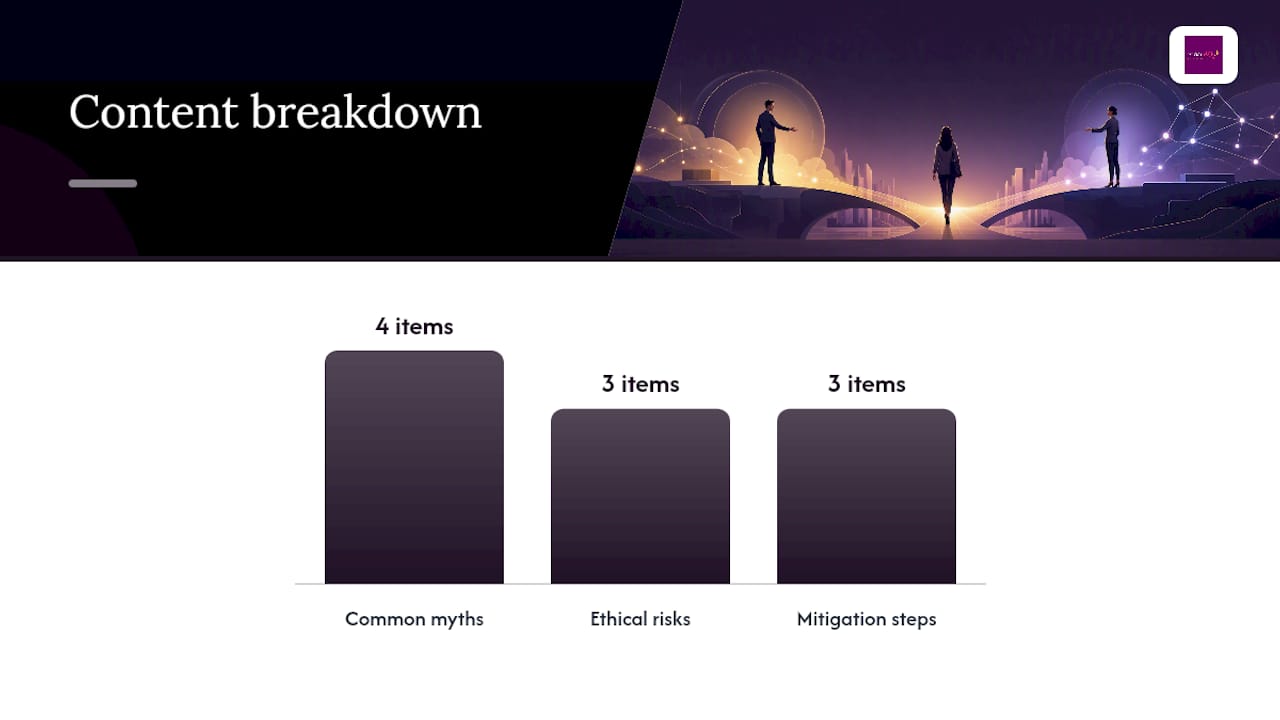
Myth-busting:
- "My manager is my sponsor." Not automatically. A manager gives feedback and sets objectives. A sponsor uses their own credibility to advocate for you in rooms you do not enter. Some managers do both; many do not.
- "If I work hard enough, a sponsor will find me." Sponsors choose people whose work they have seen. Visibility is a prerequisite, not a guarantee.
- "Mentoring and sponsoring are the same thing." They are not. Conflating them leads organisations to tick the mentoring box while leaving the advocacy gap untouched.
- "Sponsorship is only for senior professionals." Mid-career professionals benefit most from early sponsorship, precisely because the compounding effect of visibility has more time to work.
Ethical and reputational risks:
- A sponsor who backs someone without sufficient evidence of performance risks their own credibility
- Sponsorship allocated informally and without transparency can look like favouritism, damaging trust across a team
- Sponsorees who do not deliver after being advocated for put their sponsor in a difficult position — and may not get a second chance
Mitigation steps:
- Organisations should document sponsorship decisions and criteria to reduce the appearance and reality of bias
- Sponsors should be honest with themselves about whether they are backing someone on merit or on familiarity
- Sponsorees should treat every advocacy moment as a shared reputational event, not just a personal win
Integrating these safeguards into formal programmes from the outset is far easier than retrofitting them after a bias complaint.
Why the sponsor gap matters more than most people admit
The framing of "mentor vs sponsor" can make it sound like a binary choice. It is not. The real issue is that most career conversations focus on development — skills, confidence, feedback — while the structural question of who is speaking for you in closed rooms goes unasked.
At ProspHER, we see this pattern repeatedly across our community of over 2,400 women. Members arrive with strong track records and genuine capability. What they often lack is not more development. It is visibility and advocacy. The 94% who report clearer direction within 30 days are not just gaining insight — they are gaining a clearer picture of which relationships they need next and how to pursue them with intention.
The sponsor gap is not a personal failing. It is a structural one, and it disproportionately affects women and underrepresented professionals who have less access to the informal networks where sponsorship typically forms. Naming that clearly is the first step. The second is deciding, deliberately, which relationships you are going to build.
ProspHER: structured support for mentorship and visibility
Knowing you need a mentor or a sponsor is one thing. Building those relationships without a structured environment is another challenge entirely.

ProspHER gives ambitious women a structured pathway that combines mentorship, group coaching, community events, and visibility-building resources — all designed to move you from clarity to momentum. With a community of over 2,400 women and programmes built around real career outcomes, ProspHER is where development meets advocacy. Whether you are preparing to make a compelling case to a potential sponsor, building the track record that makes sponsorship possible, or simply working out which relationships you need next, the platform gives you the tools and the community to do it with confidence. Explore ProspHER membership and take the next step today.
Sources
- Mentors and sponsors make the difference | Gallup
- Drive Sponsorship & Mentoring for Women in Organizations | Catalyst
- How to get the most out of your relationship with a career sponsor — HBR