
Yes, you can turn your side hustle into a business, and the right time to plan that move is probably sooner than you think. But "ready" is not a feeling. It is a set of measurable signals, and the first thing to do this week is check three of them.
Check your revenue. Has your side hustle generated consistent income for at least three consecutive months? If so, calculate what percentage of your current take-home pay it represents.
Check your runway. Count how many months of personal living costs you have saved. Three months is the floor; six is where the risk drops to a manageable level.
Run one validation experiment. Before you hand in your notice, test whether customers will pay your full-time price. Pre-sell one offer, take a deposit, or run a short pilot. Real money from real people is the only signal that counts.
If you can tick all three, you are ready to move to the planning stage. The signals that confirm it:
- Revenue has grown month-on-month for at least three months
- You have repeat customers or active referrals coming in without you chasing them
- You are turning away work because your day job limits your capacity
- You have at least three months of personal savings set aside
- You have validated that customers will pay your intended full-time price
Key takeaways
Converting a side hustle into a full-time business is achievable when you meet the financial benchmarks, validate demand with real paying customers, and build the legal and operational foundations before you leave employment.
| Point | Details |
|---|---|
| Revenue benchmark | Aim for three consecutive months at 75% of take-home pay before planning your exit. |
| Runway target | Hold three to six months of personal living costs in savings; stress-test at 70% of average revenue. |
| Validate before you scale | Pre-sell at your full-time price and collect real payments before investing in growth. |
| Legal and tax admin | Register with HMRC, open a business bank account, and set aside 25% of income for tax from day one. |
| ProspHER membership | Structured mentorship, financial literacy, and community accountability to accelerate and de-risk your transition. |
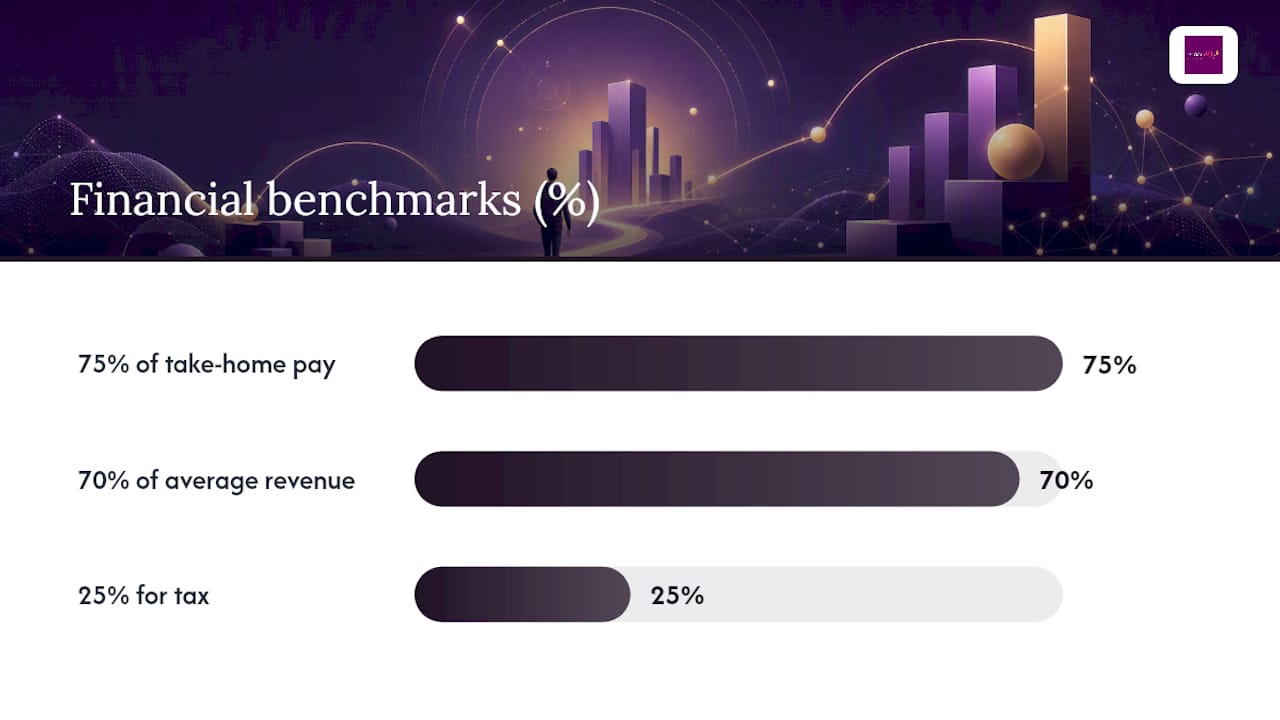
Table of Contents
- Is your side hustle ready to go full time?
- How do you validate demand before you scale?
- Are you financially ready to make the move?
- What legal and tax steps do you need to take in the UK?
- Which operations do you need to systematise before scaling?
- Which marketing channels actually work for first-time founders?
- When should you quit your job? A practical transition checklist
- How ProspHER members make the leap with less risk
- Your 8-step action plan: from side hustle to full-time business
- What it actually feels like to make the jump
- ProspHER membership: structured support for your transition
- Sources
Is your side hustle ready to go full time?
The most reliable readiness signals are not about passion or potential. They are about traction, and traction shows up in your numbers before it shows up anywhere else.
Revenue consistency is the first filter. A single strong month proves nothing. Three consecutive months at roughly 75% of your current take-home pay signals that the market is pulling demand from you, not that you are pushing hard in a sprint. That benchmark, paired with six months of personal runway, materially reduces the financial risk of the transition.
Repeat customers and referrals are the second signal. One-off buyers tell you the offer is interesting. Repeat buyers tell you it solves a real problem. Retainer work and renewals are even stronger, because they represent predictable future income.

Demand you cannot meet is the third. Turning away work, or consistently running out of hours before you run out of enquiries, is one of the clearest signals that a market exists beyond your current capacity. It also tells you that scaling is a supply problem, not a demand problem.
Operational readiness matters too. Can you delegate or automate at least one routine task today? If your business collapses the moment you step away for a week, it is not yet a business. It is a job you have created for yourself. Building scalable systems around repeatable sales and delivery processes is what separates a side hustle from a real business.
- Revenue consistent for three or more months
- Repeat customers or referrals generating 30%+ of income
- Active demand you cannot currently meet
- At least one task you can delegate or automate right now
- A clear, repeatable process for delivering your product or service
Pro Tip: *To measure your repeat rate quickly, pull your last three months of invoices or payment records and count how many unique customers appear more than once. Divide that number by your total customer count.
How do you validate demand before you scale?
Validation is not about asking people whether they like your idea. It is about asking them to pay for it. Those are very different conversations, and only one of them tells you the truth.
Low-risk validation tests such as pre-sales, pilot batches, and customer interviews confirm willingness to pay and repeatability before you invest heavily in stock, equipment, or marketing spend. Here is a simple sequence to follow:
- Define the offer clearly. Write a one-paragraph description of exactly what the customer gets, at what price, and by when. Vagueness at this stage produces vague results.
- Pre-sell before you build. Offer the product or service to five to ten existing contacts at your intended full-time price. Ask for a deposit or full payment upfront. If nobody pays, the price or the offer needs rethinking before you scale.
- Run a limited pilot. Deliver to those early buyers and gather structured feedback. Ask specifically: what would stop you buying again, and who else do you know who needs this?
- Test your pricing. Offer two price points to two small groups and measure conversion. A simple A/B test on a landing page or in a direct message sequence can reveal your market's ceiling without a large ad budget.
- Measure the right metrics. Conversion rate (how many people you pitched versus how many paid) and repeat purchase intention (how many said they would buy again) matter far more than initial interest or social media engagement.
- Decide: iterate, pause, or scale. If conversion is below 10% on a warm audience, iterate the offer or price before spending more. If it is above 20%, that is a strong signal to scale. Between those two points, run one more test with a slightly different audience before committing.
A concrete example: a freelance graphic designer running a side hustle in brand identity work could pre-sell three brand packages at her intended full-time rate, deliver them, and ask each client for a written testimonial and one referral. If two of the three refer someone who also pays, she has validated both price and acquisition channel in under 60 days, with zero ad spend.
Are you financially ready to make the move?
Money is where most transitions stall, not because the business is not viable, but because the founder has not modelled the numbers honestly. Let us fix that.
Runway guidance. A common recommendation is to have several months of personal living costs held in savings before you quit. More months of runway is advisable particularly if your business has seasonal patterns or longer sales cycles. When calculating runway, model a bad month at roughly 70% of your average revenue rather than your best month. That stress-test reveals whether your savings genuinely cover the gap, or whether you are relying on optimism.
A simple budget framework. Before you go full time, map three numbers:
Add those three figures together. That is your monthly break-even target. Your side hustle revenue needs to cover it consistently before you leave employment.
Consistent month-on-month growth across that period strengthens the case further. If revenue is flat or declining, that is a reason to pause, not to push harder.
The 75% revenue benchmark and six months of runway are not arbitrary rules. Together, they give you a buffer for the inevitable slow month, the late invoice, and the unexpected cost that every new business encounters in its first year.
Funding options in the UK. Bootstrapping from existing revenue is the lowest-risk route for most service businesses. If you need capital, options include small business loans through high-street banks and challenger banks, Start Up Loans from the British Business Bank (government-backed, with free mentoring attached), and grants through Innovate UK or local growth hubs. For women founders specifically, UK funding routes and grants are worth researching early, as several programmes are undersubscribed.
Pro Tip: Open two separate accounts the moment your side hustle generates its first pound of income: one for business operating funds and one exclusively for tax savings. This single habit prevents the most common cash-flow crisis new founders face.
What legal and tax steps do you need to take in the UK?
Getting the admin right before you go full time is not glamorous, but getting it wrong is expensive. Here is the practical sequence.
Choose your business structure first. Most people starting out register as a sole trader, which is the simplest option. You notify HMRC, file a Self Assessment tax return each year, and pay Income Tax and Class 4 National Insurance on your profits, plus Class 2 National Insurance. A limited company offers liability protection and can be more tax-efficient once profits exceed roughly £30,000 per year, but it carries more administrative overhead. A partnership structure suits two or more founders sharing ownership. If you are unsure which fits your situation, a one-hour consultation with an accountant is money well spent before you register.
Register with HMRC. As a sole trader, register for Self Assessment and complete basic bookkeeping before you go full time. The deadline for registering as self-employed is 5 October in the second tax year of trading. Missing it carries a penalty, so register early.
VAT threshold. You must register for VAT once your taxable turnover exceeds £90,000 in any rolling 12-month period (the current threshold as set by HMRC). Voluntary registration below that threshold can make sense if your customers are VAT-registered businesses, as you can reclaim input VAT on your costs.
Insurance and licences. The cover you need depends on your sector:
- Professional indemnity insurance: relevant for consultants, coaches, designers, and anyone giving advice
- Public liability insurance: relevant if you meet clients in person or work at their premises
- Product liability insurance: relevant if you sell physical goods
- Sector-specific licences: food businesses, financial services, and childcare all carry regulatory requirements; check with the relevant authority before trading
The practical sequence:
- Register your business structure with Companies House (limited company) or HMRC (sole trader)
- Open a dedicated business bank account
- Set up bookkeeping software from day one
- Arrange essential insurance before your first full-time client interaction
- Check whether your sector requires a licence or permit
For UK-specific practical signposting, Small Business Britain offers resources tailored to founders making exactly this transition.
Which operations do you need to systematise before scaling?
The gap between a busy side hustle and a functioning business is almost always a systems gap. You can be fully booked and still be one bad week away from everything collapsing, if every process lives only in your head.
The tasks to outsource or delegate first are the ones that consume time without generating revenue: bookkeeping, administrative scheduling, customer service responses, and order fulfilment if you sell physical products. Outsourcing bookkeeping to a part-time bookkeeper or accountant typically costs less per month than the time you spend doing it badly yourself.
Core systems to build before you scale:
- An invoicing and payment system (accounting software with automated reminders)
- A simple CRM or contact tracker to manage leads and follow-ups
- A scheduling tool so clients can book without a back-and-forth email chain
- A written standard operating procedure (SOP) for your most common delivery task
- A supplier readiness check: can your key suppliers scale with you, and do you have written terms in place?
Pro Tip: Hiring a contractor is faster and lower-risk than hiring an employee in the early stages. Contractors handle their own tax and National Insurance, require no employer contributions, and can be engaged project by project. Once you have consistent, predictable revenue and a role that needs more than 20 hours per week, that is the point to consider a part-time employee.
Tool categories worth exploring for UK-based founders include cloud accounting platforms, project management tools, email marketing platforms, and e-commerce or booking systems. The specific tools matter less than the discipline of using them consistently from the start.
Which marketing channels actually work for first-time founders?
The most common mistake at this stage is spreading effort across too many channels before any single one is working. Owned channels first, paid channels second.
Start with what you own. Your website, your email list, and your direct referral network are assets you control. A warm email to 50 people who already know your work will almost always outperform a cold ad to 5,000 strangers. Build your email list before you scale anything else, because it is the one channel that no algorithm can take away from you.
A 30-day test plan for two channels:
- Email and direct outreach (Week 1–2). Contact your existing network directly. Announce your full-time launch, describe the offer clearly, and include a specific call to action. Measure: how many replies, how many bookings or enquiries.
- One social or marketplace channel (Week 3–4). Choose the platform where your customers already spend time. Post consistently for two weeks with content that addresses a specific problem your offer solves. Measure: profile visits, direct messages, and conversion to enquiry.
At the end of 30 days, compare cost per enquiry and conversion rate across both. Double down on the channel with the lower cost per acquisition and the higher conversion rate. Pause the other one until you have more resource.
When to add paid channels. Paid social advertising and marketplace listings make sense once you have a proven offer, a clear conversion path, and a budget you can afford to lose while testing. Running paid ads to an unvalidated offer is expensive market research. Running them to a validated one is growth.
Track three metrics from the start: cost per acquisition (how much you spend to win one customer), conversion rate (enquiries to paying customers), and customer lifetime value (total revenue per customer over their relationship with you). These three numbers tell you whether a channel is worth scaling.
When should you quit your job? A practical transition checklist
Timing the exit well is as important as the decision itself. Leaving too early drains your runway before the business has momentum. Leaving too late means you are building a business on borrowed energy, and that catches up with you.
A phased transition timeline:
- Days 1–90 (planning phase): Validate revenue, build runway, complete legal registrations, and set your 90-day post-launch revenue target.
- Days 91–180 (pre-launch phase): Systematise delivery, build your pipeline, give notice at the right moment, and line up your first full-time clients.
- Days 181–360 (first year): Hit 30, 60, and 90-day revenue checkpoints. Adjust pricing or channels based on real data, not projections.
The decision checklist. Tick all of these before you hand in your notice:
- Three consecutive months of revenue at 75% or more of take-home pay
- Six months of personal living costs in savings
- At least two repeat customers or active retainer arrangements
- Legal registrations complete and business bank account open
- A written 90-day plan with specific revenue milestones
- Personal readiness: you are moving towards the business, not away from your job
That last point deserves its own moment. Organisational behaviour research warns that people often overstay in careers due to the sunk cost fallacy, then make an emergency exit driven by burn-out rather than a planned, strategic departure. Leaving because you cannot stand your job any longer is not the same as leaving because your business is ready. One preserves your options; the other depletes them.
Pro Tip: When you give notice, keep the conversation professional and brief. Thank your employer, offer a clean handover, and avoid burning bridges. Your former colleagues and managers are a referral network you will want access to for years.
How ProspHER members make the leap with less risk
The transition from side hustle to entrepreneur is not just a financial shift. It is an identity shift, and that is where many capable women stall. Having the right structure around you during that shift changes the outcome.
ProspHER's community of over 2,400 women includes founders at every stage of this transition, supported through mentorship, group coaching, financial literacy programmes, and structured growth pathways. 94% of members report gaining clearer direction within 30 days of joining, which matters most at exactly the moment when the path forward feels least obvious.
For women moving from side hustle to full-time founder, the membership offers:
- Mentorship from founders who have made the same leap, providing pricing guidance, positioning clarity, and honest feedback on readiness signals
- Financial literacy programmes that cover budgeting, runway planning, and understanding unit economics in plain language
- Community accountability through cohort programmes and peer groups, so you are not making high-stakes decisions in isolation
- Practical resources and a content library covering legal basics, marketing fundamentals, and operational systems
The path a member might follow: join during the validation phase, use the mentorship to pressure-test pricing and offer design, attend a retreat or cohort event to build her network, and use the financial literacy content to build her runway plan. By the time she hands in her notice, she has a tested offer, a realistic budget, and a community of women who have done it before her.
For women founders in the UK, that combination of structured support and peer accountability is one of the most practical ways to shorten the time between "ready to consider it" and "ready to commit."
Your 8-step action plan: from side hustle to full-time business
Use this as your working checklist. Each step has a realistic time marker so you know what belongs in the next 30, 90, and 180 days.
- Run the revenue check (This week): Calculate three months of side-hustle income as a percentage of your take-home pay. If it is below 50%, focus on growing revenue before planning the exit.
- Run the runway check (This week): Count your months of personal savings. Set a savings target if you are below three months.
- Validate your full-time price (Days 1–30): Pre-sell your offer at the price you intend to charge full time. Collect at least three paying customers before you proceed.
- Complete legal registrations (Days 1–30): Register your business structure, open a business bank account, and set up bookkeeping software.
- Build your core systems (Days 30–90): Implement invoicing, a simple CRM, and at least one written SOP for your main delivery process.
- Test two marketing channels (Days 30–90): Run the 30-day test plan described above. Identify your primary acquisition channel before you go full time.
- Set your exit date and give notice (Days 90–180): Once all checklist items are ticked, set a specific date, give notice professionally, and begin your 90-day post-launch plan.
- Hit your 30/60/90-day revenue checkpoints (Days 180–360): Review revenue against your target at each checkpoint. Adjust pricing, channels, or offer based on real data. Pre-planning these milestones keeps you focused on revenue generation rather than non-revenue admin in the critical early months.
What it actually feels like to make the jump
We will be honest with you: the moment you decide to go full time, you will probably feel two things simultaneously. Excitement and terror. Both are completely rational responses to a decision that changes your financial structure, your daily routine, and your sense of professional identity all at once.
What we have seen, again and again, is that the women who navigate this transition well are not the ones who feel most confident at the start. They are the ones who plan most deliberately. They check the signals. They build the runway. They validate the price. And then they move, not because the fear has gone, but because the evidence is strong enough to act on.
The emotional shift and the practical readiness are not separate things. When your numbers are solid, your systems are in place, and you have a community around you who understand what you are building, the fear becomes manageable. It does not disappear. It just stops being the loudest voice in the room.
ProspHER membership: structured support for your transition
Clarity is the thing most women tell us they are missing when they are ready to make the move from side hustle to full-time business. Not motivation. Not talent. Clarity about what to do next, in what order, and with whom.
ProspHER gives you a personalised pathway through exactly that uncertainty. Mentorship from founders who have made the leap. Financial literacy content that makes runway planning and pricing decisions feel manageable rather than intimidating. A community of over 2,400 ambitious women who are building alongside you, not watching from the sidelines. And cohort programmes that give your transition a structure and a timeline, so you are not figuring it out alone.
Women's business mentoring through ProspHER is not a generic networking platform. It is a structured growth environment built for women who are serious about the next step. If you are ready to move from planning to doing, join ProspHER today and get your personalised pathway within 30 days.
Sources
- How to Turn Your Side Hustle Into a Real Business
- How to Turn Your Side Hustle Into a Full-Time Business in 2026 | Future Sharks
- Beancount
- How to turn your hobby into a business (Shopify blog)