
Women life coaching is the practice of partnering with a professional coach to gain clarity, build confidence, and create purposeful direction in both career and personal life. Known formally as personal development coaching for women, it is distinct from therapy. Coaching focuses on forward-looking growth and assumes you are already functional, not in need of healing. The International Coaching Federation (ICF) sets the professional standards most credible coaches work within. ProspHER's community of over 2,400 women reflects just how many are actively seeking this kind of structured, personalised support to move forward with momentum.
What does women life coaching actually involve?
The first session in any credible coaching programme is a discovery session. Initial sessions establish a baseline by identifying where you feel stuck, overwhelmed, or unclear. That baseline shapes everything that follows. Without it, a coach is guessing.
Most programmes run for around four months with weekly or fortnightly sessions. That timeline is deliberate. Real behavioural change does not happen in a single conversation. It requires consistent repetition, reflection, and gradual integration of new patterns into daily life.
The structure of a typical programme moves through three phases:
- Discovery. You map your current reality, identify what is holding you back, and clarify what you actually want.
- Reflection and reframing. You examine the beliefs, habits, and identity narratives that keep you in patterns that no longer serve you.
- Implementation and embodiment. You practise new behaviours in real situations, building the muscle memory of a different way of operating.
Progress in coaching is not purely practical. Emotional shifts, such as feeling less anxious before a difficult conversation or noticing you no longer apologise reflexively, are as significant as ticking off career goals.
Pro Tip: Ask your coach at the outset how they measure progress. A good coach tracks both internal shifts and external results, not just whether you completed tasks.
Credible coaches also integrate mindfulness, embodiment practices, and trauma-informed approaches to create a safe environment for growth. This is particularly relevant for women who carry stress in their bodies and find that cognitive tools alone do not shift deep patterns.
How does coaching address the unique challenges women face?
Women arrive at coaching carrying a specific set of pressures. These are not universal human struggles dressed up as female ones. They are distinct.
The most common presenting issues include:
- Burnout from years of over-delivering and under-resting
- Imposter syndrome that persists even after significant achievement
- Identity shifts triggered by career transitions, motherhood, or relationship changes
- Difficulty setting boundaries without guilt or fear of rejection
- Juggling multiple roles with no clear sense of personal priority
Burnout and stuckness in women frequently stem from internal imbalance rather than a lack of external opportunity. This is the insight that separates effective female empowerment coaching from generic productivity advice. The problem is rarely that you do not know what to do. The problem is that something internal is making it hard to do it.
Coaching targets self-leadership restoration. That means rebuilding your relationship with your own judgement, your body's signals, and your sense of what you actually want, separate from what others expect of you.
"Self-awareness alone is not enough. True growth requires the skill of choosing yourself and practising new behaviours even when it feels uncomfortable. That discomfort is not a sign you are doing it wrong. It is a sign you are doing it for real."
This reframe matters enormously. Many women abandon coaching or personal development work precisely when it starts to feel hard, assuming the discomfort signals failure. Coaching builds the skill of choosing yourself despite that discomfort, not after it disappears.
The misconception that life coaching for women is only about career advancement is worth addressing directly. Identity reconciliation, well-being, and self-leadership restoration are the foundation. Career results follow from that foundation, not the other way around.
What methods and frameworks do women's coaching programmes use?
Effective coaching is not a single technique applied repeatedly. It draws from multiple frameworks and adapts them to the individual.
| Framework or method | What it does |
|---|---|
| 4 C's framework | Builds clarity, confidence, courage, and congruence in sequence |
| Neuroscience-informed coaching | Uses brain-based understanding to break habitual thought patterns |
| EFT tapping | Reduces emotional charge around specific fears or limiting beliefs |
| Somatic and embodiment work | Connects body awareness to decision-making and leadership presence |
| Mindfulness practices | Regulates the nervous system and creates space between stimulus and response |
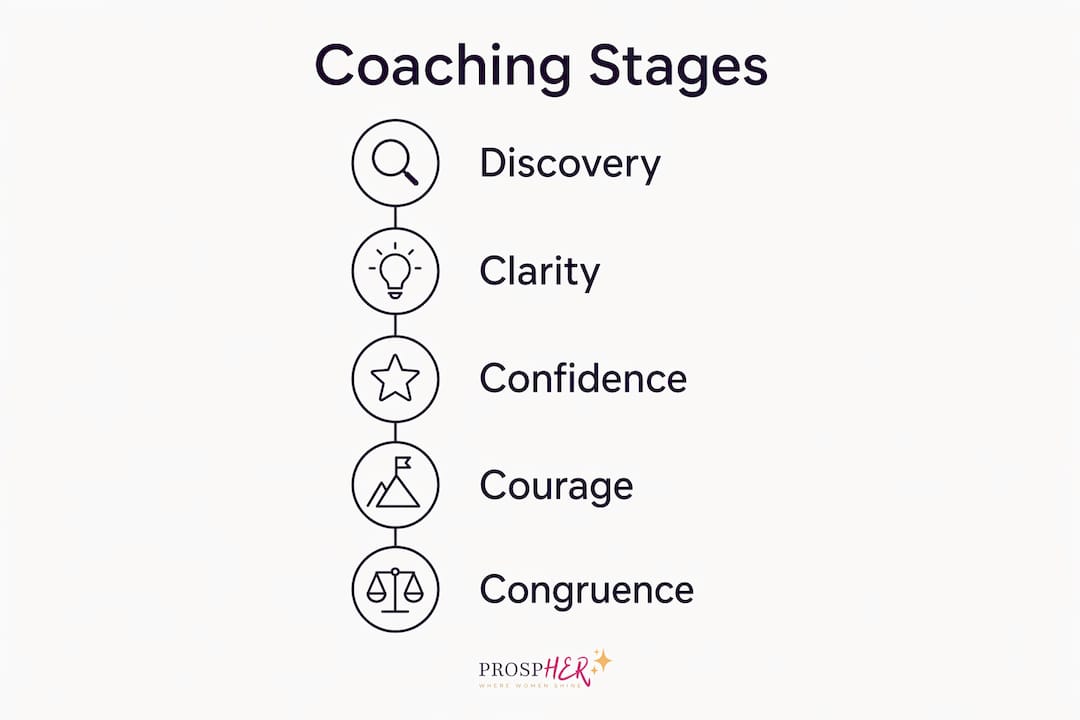
Effective coaching blends mindfulness, embodiment, and feminine leadership principles alongside practical strategy. This combination is what separates lasting change from temporary motivation. Motivation fades. Embodied new behaviour does not.
The 4 C's framework is particularly well suited to women navigating career transitions or confidence gaps. Clarity comes first because without it, confidence has no direction. Courage follows once confidence is grounded. Congruence, the sense that your actions match your values, is the final marker of sustainable change.
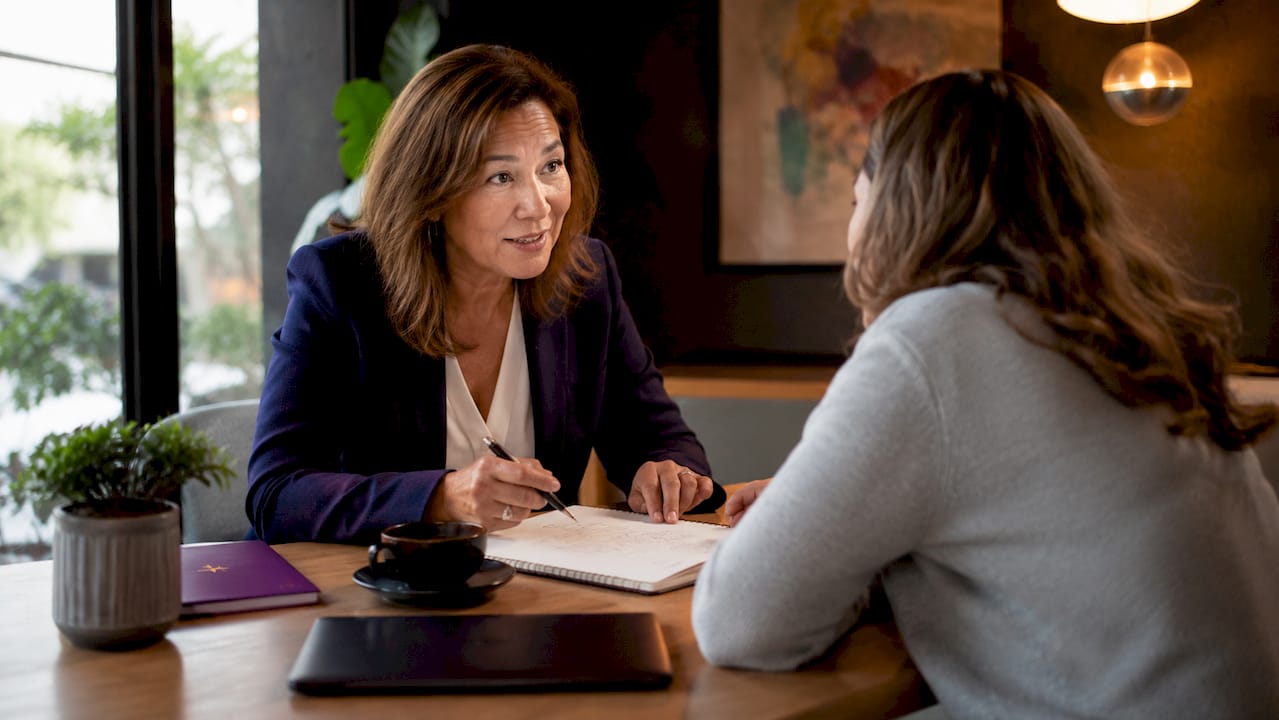
Identity work sits beneath all of these methods. Coaching is a non-linear, recursive process of identity transformation and unlearning perfectionism. You do not move in a straight line from stuck to sorted. You circle back, integrate, and move forward again. Expecting linearity is one of the most common reasons women feel they are "failing" at coaching when they are actually progressing normally.
Pro Tip: If a coaching programme promises a fixed, step-by-step path to transformation, treat that as a warning sign. The best programmes adapt to where you are, not where a curriculum says you should be.
How do you choose the right life coach for women?
Choosing a coach is a decision that deserves the same rigour you would apply to hiring a senior colleague. The market is unregulated, which means the quality gap between practitioners is significant.
Start with these questions before committing to any programme:
- What accreditation do you hold, and with which body?
- How many coaching hours have you completed?
- What is your experience with the specific challenges I am facing?
- How do you measure progress across a programme?
- What does a typical session look like, and how do you adapt your approach?
Credible coaches hold ICF accreditation and often bring substantial coaching hours alongside relevant leadership or sector experience. That combination matters. Accreditation confirms methodological rigour. Real-world experience confirms contextual understanding.
Beyond credentials, consider these practical factors:
- Coaching style. Some coaches are highly structured and goal-oriented. Others are more intuitive and exploratory. Neither is superior. The right fit depends on how you learn and what you need.
- Programme length. Short programmes of four to six weeks can build awareness. Sustained change typically requires the four-month commitment that most serious programmes offer.
- Specialist focus. If your primary challenge is leadership confidence, seek a coach with a track record in female leadership. If it is a career pivot, find someone with experience in transitions.
- Discovery sessions. Most credible coaches offer a clarity call or discovery session before you commit. Use it. Pay attention to whether you feel genuinely heard, not just sold to.
Building real self-belief is a process that requires the right environment and the right guide. Do not settle for a coach whose style does not match your needs simply because they are available or affordable.
Key takeaways
Women life coaching works because it addresses the internal foundations of confidence, identity, and self-leadership before pursuing external results.
| Point | Details |
|---|---|
| Coaching is not therapy | It focuses on forward growth from a functional baseline, sometimes integrating trauma-informed practices for safety. |
| Programme length matters | Four months with consistent sessions is the standard for lasting behavioural change. |
| Internal shifts count as progress | Emotional changes like reduced anxiety or stronger boundaries are as significant as career outcomes. |
| Accreditation signals quality | ICF credentials and substantial coaching hours are the clearest markers of a credible coach. |
| Discomfort is part of the process | Temporary social friction when setting new boundaries is a predictable and necessary phase of growth. |
What I have learned from watching women go through this process
Coaching is not a shortcut. That is the first thing worth saying plainly.
The women who gain the most from personal development coaching are not the ones who arrive with the clearest goals. They are the ones who are willing to sit with uncertainty long enough to find out what they actually want, rather than what they have been told to want.
The most underestimated part of transformational coaching for women is the unlearning. Unlearning the habit of shrinking. Unlearning the belief that your needs are negotiable. Unlearning the idea that discomfort means you are on the wrong path. Choosing yourself can cause temporary social friction, and that friction is real. Friends may react oddly. Colleagues may push back. That is not a reason to stop. It is confirmation that something has genuinely shifted.
What I find most striking is how many high-achieving women arrive at coaching having already read every book, completed every course, and built impressive careers, yet still feel fundamentally unclear about what they want next. High-achieving women often lack permission to choose themselves. Coaching gives them that permission, and then builds the skill to act on it repeatedly.
The question worth sitting with is this: what would you do differently if you trusted your own judgement completely?
— ProspHER
ProspHER: built for women who are ready to move forward
If coaching has shown you what is possible, ProspHER gives you the community and resources to keep that momentum going.
ProspHER is built specifically for ambitious women who want clarity, direction, and real traction in their careers and businesses. Rather than adding noise, the platform creates a personalised pathway based on where you are right now. With over 2,400 members and 94% reporting clearer direction within 30 days, it is a space where progress is the norm. Whether you are navigating a career transition, building a business, or consolidating the confidence your coaching work has unlocked, ProspHER supports your next step with mentorship, community, and practical tools that meet you where you are.
FAQ
What is women life coaching?
Women life coaching is a professional coaching practice designed to help women gain clarity, confidence, and direction in their personal and career lives. It is forward-focused and distinct from therapy, working from the assumption that the client is already capable and functional.
How long does a women's coaching programme last?
Most programmes last around four months with weekly or fortnightly sessions. This timeline allows for genuine behavioural change and integration of new patterns, rather than surface-level motivation.
How do I find a credible life coach for women?
Look for coaches accredited by the International Coaching Federation (ICF) with substantial coaching hours and relevant experience. Always use a discovery or clarity call before committing to a full programme.
What challenges does life coaching for women address?
Coaching addresses burnout, imposter syndrome, identity shifts, boundary-setting difficulties, and the internal imbalance that often underlies career stuckness. It targets self-leadership restoration, not just external goal achievement.
Is women life coaching the same as therapy?
No. Coaching assumes a functional baseline and focuses on forward growth. Some coaches integrate trauma-informed practices for nervous system safety, but the work is developmental rather than therapeutic.