
Financial planning for women is the process of building tailored money strategies that reflect women's unique income patterns, career breaks, and longer lifespans to create lasting security and independence. Standard financial models assume uninterrupted careers and steady incomes. They were not built for you. Women in the UK live, on average, 5–7 years longer than men, take more career breaks for caregiving, and face a persistent gender pay gap. Each of these factors compounds over decades. Getting your plan right, at every stage, is not optional. It is the foundation of real independence.
What essential financial strategies should women adopt at every life stage?
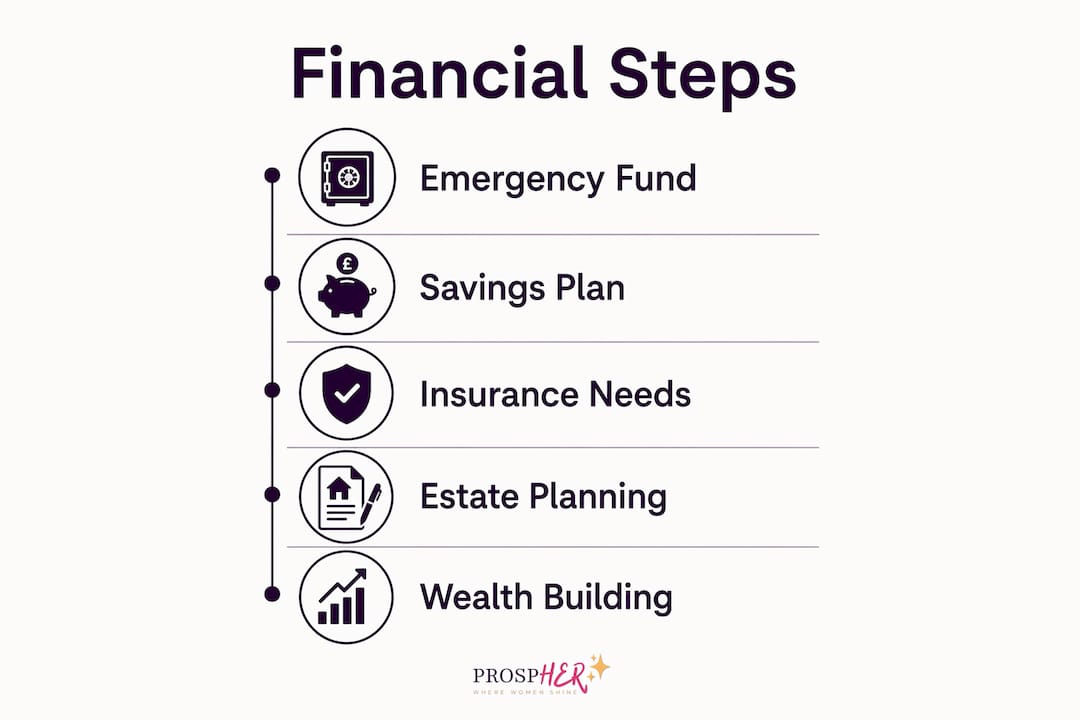
The most effective personal finance strategy for women starts with one non-negotiable: an emergency fund. Aim to save 3–6 months of essential living expenses in a high-yield, accessible savings account. This buffer protects you during redundancy, illness, or a career pivot without forcing you into debt.
Once that foundation is in place, the focus shifts to building wealth through consistent saving and investing. Experts recommend that women invest 10–15% of gross income toward retirement, then increase contributions by 1% with each pay rise to offset the long-term impact of career breaks. Small, automatic increases compound significantly over 20 or 30 years.
Here are the core strategies to build across your working life:
- Emergency fund first. Three to six months of expenses, held separately from your current account, gives you options when life changes unexpectedly.
- Automate your pension contributions. Set contributions to increase automatically with every salary review so the decision never relies on willpower.
- Build your credit score actively. A strong credit history reduces borrowing costs and matters enormously during major purchases or business funding.
- Budget with a framework. The 50/30/20 rule (needs, wants, savings) gives structure without rigidity and adapts across income levels.
- Negotiate your salary. Every £1,000 you leave on the table today costs you far more in lost pension contributions and compound growth over a career.
- Open an ISA or workplace pension early. Tax-efficient wrappers reduce your liability and accelerate growth, particularly for younger women starting out.
Pro Tip: Set up a standing order to your savings account on payday, not at the end of the month. You save what you do not see.
Life stage matters too. Financial planning for young women in their twenties centres on credit building, emergency funds, and starting pension contributions, even small ones. Women in their thirties and forties managing mortgages, children, or career transitions need to review protection insurance and update their plans annually. Financial planning for women over 50 shifts toward maximising pension pots, reducing debt, and planning for healthcare costs.
How do life transitions affect women's financial plans?
Career breaks, caregiving, marriage, divorce, and widowhood each create a fork in the road for your finances. The challenge is that most women face several of these transitions, not just one. Financial independence requires integrating investment management with tax planning, estate planning, and insurance to manage these shifts without losing momentum.

Career breaks for caregiving reduce pension contributions and can affect National Insurance credits in the UK, which directly impacts your State Pension entitlement. Claiming National Insurance credits during periods of childcare or caring for a disabled relative protects your record. This is a step many women miss entirely.
Marriage and divorce both demand an immediate financial review. On marriage, update your beneficiary designations, review your insurance cover, and consider a cohabitation or prenuptial agreement if assets are significant. On divorce, pension sharing orders are one of the most valuable and most overlooked tools available to women in the UK. A pension can be the largest asset in a marriage, yet many women do not claim their share.
Widowhood creates urgent financial decisions at the worst possible time. Knowing where all accounts, policies, and legal documents are held before a bereavement makes an enormous difference. The table below maps each transition to the key financial action required.
| Life transition | Key financial action |
|---|---|
| Career break or caregiving | Claim NI credits; maintain pension contributions where possible |
| Marriage | Update beneficiaries; review joint insurance and wills |
| Divorce | Seek a pension sharing order; separate all joint accounts |
| Widowhood | Locate all accounts and policies; seek probate guidance promptly |
| Approaching retirement | Adjust projections for longevity; review State Pension forecast |
Retirement projections for women must account for career gaps, a longer lifespan, and the possibility of part-time work rather than a clean stop at 65. Default pension calculators rarely do this. Ask your provider or an independent financial adviser to model scenarios that reflect your actual career history.
What are the critical insurance and estate planning considerations for women?
Insurance and estate planning are the parts of personal finance most women delay. That delay is expensive. Disability insurance protects your income if illness or injury stops you from working. Health insurance does not do this. The two products serve entirely different purposes, and confusing them leaves a significant gap in your protection.
Long-term care costs are substantial. Median annual costs range from £26,000 for adult day care to £127,750 for a private nursing home room. Women are more likely to need long-term care and to need it for longer, given their greater average longevity. Planning for this cost in your fifties, rather than your seventies, gives you far more funding options.
Estate planning is not only for the wealthy. Every woman needs:
- A valid, up-to-date will that reflects her current wishes and family situation.
- A Lasting Power of Attorney (LPA) covering both property and financial affairs, and health and welfare decisions.
- A healthcare proxy or advance directive stating medical preferences if she cannot communicate them.
- Regular reviews of beneficiary designations on pension schemes and life insurance policies.
That last point is critical. Beneficiary designations on accounts override wills. An outdated form naming an ex-partner can redirect assets regardless of what your will says. Review these designations after every major life event.
Pro Tip: Buy disability and long-term care insurance in your forties if possible. Premiums rise sharply with age, and health conditions acquired later can make cover unavailable.
Organising estate documents and securing disability insurance reduces mental burden and increases your sense of control. Think of it as financial self-care, not a morbid task.
How can women build wealth and maintain financial independence?
The gender pay gap is not just a fairness issue. It is a compounding wealth gap. Every year of lower earnings means lower pension contributions, lower employer matches, and less capital to invest. The effect accumulates across a career and into retirement. Closing that gap starts with negotiation.
Salary negotiation is the single highest-return financial action most women can take. A £3,000 increase at age 30, compounded through pension contributions and investment growth, is worth significantly more by retirement than any savings rate adjustment. Research market rates using resources like the Office for National Statistics earnings data, and make the ask with evidence.
Women's non-linear careers require goals-based financial planning that aligns assets with personal values and lifestyle priorities rather than generic benchmarks. This means defining what financial independence actually looks like for you. Is it the ability to leave a job without panic? Fund a business? Support ageing parents? Your plan should be built around your answers, not a generic retirement age.
Here are four practical ways to build and protect wealth:
- Systemise your saving. Automate transfers to ISAs, pensions, and emergency funds so saving happens without a monthly decision.
- Review your plan annually. Life changes faster than most financial plans. A yearly review catches gaps before they become crises.
- Invest, do not just save. Cash savings lose value to inflation over time. Stocks and shares ISAs and pension funds grow your wealth in real terms.
- Build financial literacy continuously. Financial planning workshops for women, books such as The Wealth Chef by Ann Wilson, and community groups all build the confidence to make bigger decisions.
Pro Tip: If financial anxiety stops you from opening statements or reviewing your pension, start with just one account. Momentum begins with a single action.
Women who treat financial planning as an ongoing practice, rather than a one-off event, build far greater resilience. The goal is not perfection. It is progress, reviewed and adjusted as your life evolves. For women building businesses alongside personal wealth, the female founders guide at ProspHER covers the intersection of business finance and personal financial independence in practical detail.
Key takeaways
Effective financial planning for women requires tailoring every strategy, from emergency funds to estate documents, to the realities of longer lifespans, career breaks, and life transitions.
| Point | Details |
|---|---|
| Emergency fund first | Save 3–6 months of essential expenses in a high-yield, accessible account before investing. |
| Invest 10–15% of income | Increase pension contributions by 1% with each pay rise to offset career break losses. |
| Plan for life transitions | Update beneficiaries, insurance, and wills after every major life event such as marriage or divorce. |
| Protect your income | Disability insurance covers lost earnings; health insurance does not. Both are necessary. |
| Use goals-based planning | Align your financial plan with your personal values and life priorities, not generic benchmarks. |
What we have learned from watching women plan their finances
At ProspHER, we see a consistent pattern. Women arrive with far more financial capability than they give themselves credit for. The gap is rarely knowledge. It is confidence and clarity.
The conventional financial planning world still defaults to models built around uninterrupted, full-time careers. Most women do not have that. They have career pivots, caring responsibilities, periods of self-employment, and life events that reshape everything. A plan that does not account for those realities is not a plan. It is a fiction.
What actually works is treating your financial plan as a living document. Not a spreadsheet you open once and file away. The women we see make the most progress are the ones who review their plan after every major change, ask uncomfortable questions about their pension, and negotiate their salary even when it feels awkward. They also understand that financial planning acts as self-care. Sorting your LPA, updating your beneficiaries, and knowing where your assets are held gives you a kind of mental freedom that no savings rate can buy.
The other thing we notice? Women who engage with a community of peers who are doing the same thing move faster. Accountability and shared experience reduce the paralysis that stops so many women from starting. You do not need to have it all figured out. You need to take the next step.
— ProspHER
ProspHER: clarity and momentum for ambitious women
Financial independence does not happen in isolation. Career growth, business decisions, and money management are all connected. ProspHER is built for ambitious women who want clarity across all of it.

With a community of over 2,400 women and 94% of members reporting clearer direction within 30 days, ProspHER cuts through the noise and gives you a personalised pathway. Whether you are navigating a career change, building a business, or simply trying to get your finances in order alongside everything else, ProspHER provides the mentorship, resources, and community to move forward with confidence. Visit ProspHER to find your next step.
FAQ
What is financial planning for women?
Financial planning for women is the process of creating money strategies tailored to women's unique circumstances, including longer lifespans, career breaks, and caregiving roles. It covers budgeting, saving, investing, insurance, and estate planning across all life stages.
How much should women save for retirement in the UK?
Experts recommend saving 10–15% of gross income toward retirement and increasing contributions by 1% with each pay rise. Women should also check their State Pension forecast via the UK Government's online service to identify any gaps in their National Insurance record.
Why is estate planning important for women?
Estate planning protects your assets and ensures your wishes are followed if you become ill or die. Beneficiary designations on pensions and insurance policies override your will, so reviewing them after every major life event is critical.
How do career breaks affect women's pensions?
Career breaks reduce pension contributions and can create gaps in your National Insurance record, lowering your State Pension entitlement. Claiming NI credits during periods of childcare or caring for a relative protects your record at no cost.
What insurance do women most commonly overlook?
Disability insurance is the most commonly overlooked cover for women. It replaces income if illness or injury prevents you from working, which health insurance does not do. Purchasing it in your forties secures better rates before age-related premium increases apply.